






Introduction
Whether you are a mechanic, an electrician, or a detailer, light is your most important tool. Standard overhead lighting often fails to reach the tight spaces where the real work happens. This is where the inspection lamp—a specialised portable lighting solution—becomes indispensable. Understanding these lamps means the difference between a job well done and a costly oversight. This article covers everything you need to understand before buying one.
What is an Inspection Lamp – Basic Definition & Core Functionality
An inspection lamp, often called a workshop light or work light, is a portable light specifically designed to inspect or visualise objects and instruments in demanding environments. These high-intensity lamps are the most valuable lighting tools in illuminating specific, often hard-to-reach areas. Most models feature ergonomic grips, durable casings, and mounting options such as hooks or magnetic bases. They deliver concentrated beams of wide-angle flood lighting tailored for close-up examination.
The goal or purpose of an inspection lamp isn’t just to make things bright. It is to provide clarity, colour accuracy, and shadow reduction so that defects, connections, or components can be identified with absolute certainty. In many industries, even minor visibility improvements can significantly enhance work quality and safety. Inspection lamps provide consistent brightness to help users detect cracks, loose connectors, damaged cables, worn contactors, faulty switches, or overheating components.
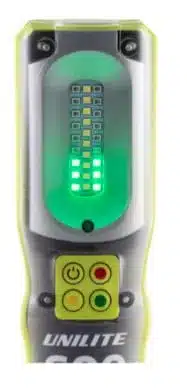
The Shift to LED Technology: LED Inspection Lamps
The transition from halogen and incandescent bulbs to LED technology has transformed inspection lighting. One of the most significant advantages of LED inspection lamps is energy efficiency. LEDs generate more light per watt and produce very little heat, reducing battery drain in rechargeable models. LEDs are solid-state components; they are more resistant to shock and vibration. Additionally, modern LED lamps often include adjustable brightness levels, focused spot beams, and wide floodlight modes. These features have led to a massive transformation, moving away from traditional tubes toward LED technology.
Different Variants of Inspection Lamps: Which One Do You Need
Inspection lamps are available in multiple designs, each suited to specific applications. Some of the most standard types include:
Handheld Inspection Lamps – Compact and lightweight, ideal for quick checks and mobile tasks.
Slim Bar Lights – Designed for narrow spaces such as engine compartments and control panels.
Head-Mounted Lamps – Worn like a headband. Useful in confined spaces. Common in electrical and plumbing work.
Magnetic Base Lamps – Provide hands-free operation by attaching to metal surfaces.
Hook-Mounted Lamps – Suitable for hanging inside vehicle bonnets or industrial cabinets.
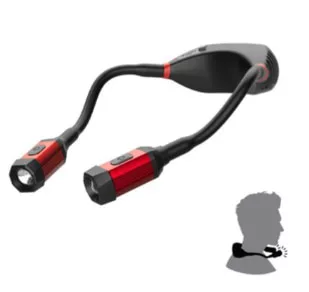
Flexible Neck Lamps – Allow precise beam positioning, reaching inside compact electronics assemblies or around densely packed cables and connectors.
Heavy-Duty Industrial Models – Built with reinforced housing for demanding environments.
Rechargeable vs Corded Models: Key Features & Applicability
The debate between rechargeable (cordless) and corded models usually comes down to a trade-off between mobility and runtime. Rechargeable lamps, powered by Lithium-ion batteries, are the modern standard. They offer unmatched freedom of movement, so you can move around a vehicle or job site without tripping over wires or hunting for a power outlet. They are the go-to choice for quick inspections and mobile service technicians.
However, corded models still hold a significant place in stationary workshops. While they lack the portability of their battery-powered counterparts, they offer uninterrupted power. For heavy-duty tasks that require maximum brightness for an entire workday, a corded lamp ensures the light never dims or dies.
Understanding Light Temperature & Colour Rendering Index (CRI)
When it comes to high-end inspection, not all light is created equal. Two technical specs define the quality of your vision: light temperature and CRI.
Light Temperature: Light temperature or colour is measured in Kelvin (K). Most inspection lamps sit between 5000K and 6000K, providing a daylight white. It helps you stay alert and see details clearly. For inspection tasks, neutral to cool white light is generally preferred because it enhances visibility and detail recognition.
Colour Rendering Index (CRI): This measures how precisely a light source shows an object’s true colours. For most tasks, a CRI of 70-80 is fine. However, for specialised tasks like paint matching or electrical wiring, a High CRI (95+) lamp is essential.
Final Thoughts
Inspection lamps are more than simple lighting devices. They are precision tools designed to enhance visibility, safety, and efficiency in technical environments. With advancements in LED technology, professionals now benefit from brighter, longer-lasting, and more durable lighting solutions. By understanding the different variants, power options, and lighting specifications, you can select an inspection lamp that matches your operational needs.
Related posts:
 Understanding the Basics of Air Purifiers
 RCA Connectors in Modern Audio-Visual Systems – A Review
 Wireless Webs: Exploring the Power of Mesh Networks
 Basic Laboratory Equipment You Should Know About
 A Beginner’s Guide to Data Loggers: What You Should Know
 Exposure to Aluminium Wiring
 Fuse Problems 101: Testing And Identifying Fuse Problems
 Your Guide to Understanding Smoke Alarm
 SMART CURRENT SENSING AND MONITORING TECHNIQUES
 Omron Automation and Safety
 LED: IS THE FUTURE BRIGHT OR DARK?
 Adhesives Guidebook – Definition, Types and Examples


