






Introduction
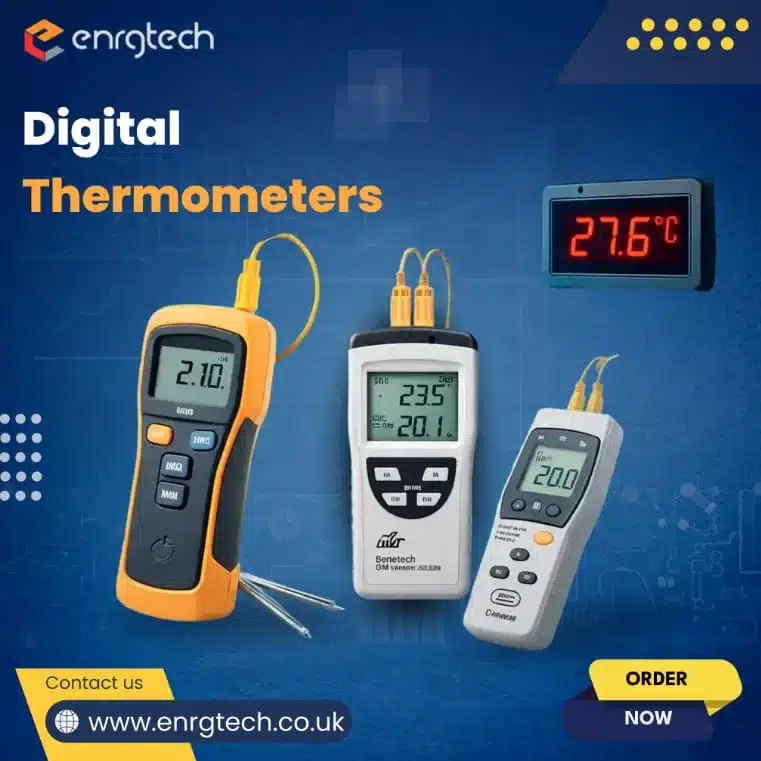
In both clinical settings and everyday households, precision temperature measurement is vital. Gone are the days of shaking down mercury-filled glass tubes. Today’s devices offer speed, safety, and precision. Digital thermometers have replaced the traditional liquid-in-glass instruments with high-tech, electronic alternatives. This article delves into the mechanics, benefits, accuracy, and types of technology that make these devices indispensable in the modern world.
What are Digital Thermometers? Definition & Core Functionality
A digital thermometer can be defined as an electronic device designed to measure temperature and display the results in a digital format. Unlike traditional thermometers that rely on the physical expansion of a liquid, digital versions use specialised sensors to detect thermal changes. These devices convert the physical property of heat into an electrical signal, which is then processed by a microchip and shown as a numerical value on an LCD or LED screen.
The core functionality of digital thermometers centres on providing quick, easy-to-read, and highly portable temperature monitoring for a wide range of environments. They provide fast, repeatable, and easy-to-read temperature measurements for both human and environmental monitoring.
How Do Digital Thermometers Work? An Overview of Their Operating Principle
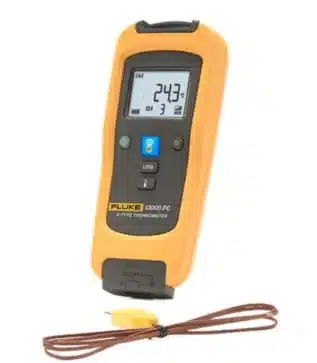
Digital thermometers operate by using a temperature-sensitive electronic component that changes its electrical properties in response to heat or cold. An internal circuit detects this change, converts it into a digital signal, and processes it by a microcontroller. The processed data is then shown on a digital display, allowing users to read the temperature instantly with minimal interpretation error.
The working mechanism depends on the type of thermometer. Whether you need a wired, wireless, handheld, differential, desk, or wall-mounted model, each has a different operating principle. In the case of infrared digital thermometers, the device instead measures the thermal radiation emitted by an object and converts that energy into a temperature value.
Why Choose Digital Thermometers Over Mercury Thermometers?
The shift from mercury to digital thermometers is primarily driven by safety and efficiency. Mercury is a toxic heavy metal with significant environmental and health risks if a glass thermometer breaks. These thermometers eliminate this hazard entirely, using robust plastic casings and electronic components. Furthermore, digital models provide results much faster—often in seconds, compared to the minutes it takes for mercury to expand. Digital variants also include convenient features such as “beep” alerts (alarms) when the reading is stable, memory storage for previous temperatures, and backlit screens for visibility in low light.
What is Meant by the Accuracy of Digital Thermometers?
Accuracy in a digital thermometer refers to how closely the displayed numerical value matches the object’s actual temperature. Most high-quality digital thermometers offer an accuracy range of ±0.1°C to ±0.2°F. This precision depends on various factors. For instance, the quality of the internal sensor, the device’s calibration during manufacturing, and the battery level. High-accuracy digital models are designed to minimise measurement errors and provide consistent, repeatable results within a defined tolerance range. However, electronic components can drift over time; therefore, professional-grade models are often recalibrated periodically to ensure they maintain their certified level of exactness.
Common Sensor Technology in Digital Thermometers
Different environments require different detection methods. The most common technologies include:
- Thermistors: Thermistors change their electrical resistance with temperature. They are highly sensitive and cost-effective over a limited range. Thermistors are the standard for medical and household “stick” thermometers.
- Thermocouples: Thermocouples generate a small voltage when two different metals are joined and exposed to heat. They are highly durable and are used primarily in industrial settings.
- Resistance Temperature Detectors (RTDs): Known for extreme stability and accuracy, these use pure metals like platinum and are common in laboratory work.
- Infrared Sensors: These allow non-contact measurement by detecting infrared energy. They are ideal for forehead scans or checking moving machinery.
Digital Thermometers: Applications Across Industries
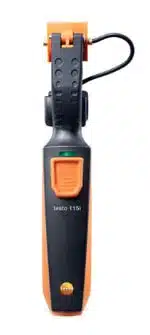
Digital thermometers are used across diverse sectors, each with unique accuracy and durability requirements. Some typical applications include:
- Medial and Healthcare Facilities: Monitoring body temperature, detecting fever, and managing patient care.
- Food and Beverage Industry: Ensuring safe cooking, storage, and transport temperatures.
- Electronics and Engineering: Testing circuit components, monitoring equipment heat levels, and verifying thermal performance.
- HVAC and Building Systems: Measuring air temperature, duct conditions, and system efficiency.
- Laboratories and Research: Conducting experiments, validating environmental conditions, and supporting quality assurance.
Key Takeaways
Digital thermometers have set a new standard for thermal measurement, combining the speed of electronics with the precision of advanced material science. They provide the reliability and safety that old mercury-based technology simply cannot match. By choosing the right type and using it correctly, a digital thermometer remains a trusted tool in both home and professional healthcare settings.
Related posts:
 Digital Multimeters vs. Analogue Multimeters: A Comparison Guide
 What Are Panel Printers? A Complete Guide
 What Threaded Inserts Can Do for You?
 Integrating Smart Lighting System with IoT
 LED Lighting Provides Numerous Environmental Benefits
 How To Configure Multiple Wi-Fi Setups On a Headless Raspberry Pi
 Code Locks Explained: Ensuring Safety with Every Turn
 Choosing The Right RF Cable: Step-By-Step Guide
 THE LMS6002D: WORLD’S FIRST PRORAMMABLE RF IC
 How Sensor Fusion Can Enhance Battery Management System
 Outdoor safety lighting fitting and advantages
 3D Printing: Formlabs to Shift to Manufacturing


