






Introduction
While a standard handheld drill is designed to create holes and drive screws vertically, it lacks the stability required for intricate joinery and decorative profiling. Enter router drills, designed to move across and into materials with absolute consistency. These drills are precision powerhouses that combine high-speed rotation with robust depth control. Understanding the nuances of these tools isn’t just about adding a gadget to your workshop—it’s about eliminating the guesswork from your build. This article serves as your strong foundation, exploring their significance, the most popular types, and their real-world applications.
What are Router Drills: Definition & Core Features
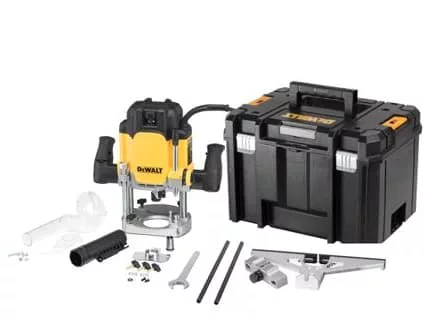
Router drills, also called routers or router bits, are specialised power tools designed to shape, hollow, trim, and detail wood, plastics, and light metals with robust precision. To achieve this, these tools incorporate a powerful electric motor that drives high-speed rotating bits to remove material. A router drill delivers stable cutting performance and comes with variable speed control to match different materials and bit sizes. To further improve control, safety, and finish quality, many models also come with ergonomic handles, interchangeable collets, dust extraction ports, and electronic feedback systems. Finally, for a professional edge, modern routers utilise a variety of flute geometries—available in up-cut, down-cut, or compression styles—ensuring a cleaner, professional finish.

Router Drills vs. Standard Drills: What’s the Difference?
Router drills and standard drills may look similar; however, they serve fundamentally different purposes. The primary distinction lies in their cutting direction and operating speed. A standard drill is specifically designed for drilling holes and driving screws by applying force downward. Operating at relatively low speeds, it uses the tip of the bit to focus on simple tasks like general assembly and construction. In contrast, a router drill is built for radial loads, cutting through the side of the bit to shape edges, create grooves, or hollow out surfaces. Because they operate at much higher speeds, routers can achieve a smooth, professional finish without tearing the wood fibres.
Unparalleled Benefits of Router Drills: Exploring Their Significance
Router drills provide a combination of unparalleled advantages for both hobbyists and professional craftsmen. The significance of these power tools lies in their ability to perform complex, multi-dimensional tasks that standard drills simply cannot handle. Some of their unrivalled benefits include:
- Robust Precision and Accuracy
One of the most significant benefits of a router drill is the precision of its finish. They allow for intricate cuts, smooth edges, and accurate routing, essential for detailed woodworking designs.
- Multi-Directional Cutting Capability
With interchangeable bits, routers can perform a range of tasks. They are designed to cut along their entire side profile, making them perfect for tasks such as trimming, shaping, dovetailing, mortising, and engraving.
- Time and Labour Efficiency
Router drills significantly reduce the physical effort and time required for complex joinery and repetitive boring tasks. Operating at high speeds, they increase productivity in workshops and on job sites.
- Smooth Finishing
Another notable benefit of using a router drill is its smooth finishing. They produce clean, smooth finishes that often require little to no sanding. With superior hole or recess quality, they enhance the final aesthetic of the workpiece.
- Compatibility with Jigs, Guides, and Accessories
Routers work well with templates and jigs for repetitive or custom shapes, thanks to their ability to interface with various accessories. They can integrate bushings, jigs, guides, and fences, enhancing consistency and efficiency.
Most Standard Types of Router Drills Available in the Market
Router drills come in several designs, each suited to different levels of work, environments, and precision requirements. These popular variants include:
Fixed-Base Router Drills: These routers have a stationary base, with the cutting depth set before operation. They are ideal for edge work, trimming, and consistent depth cuts. Fixed-base models are stable, simple to control, and well-suited for beginners and repetitive routing tasks.
Table-Mounted Router Drills: In this setup, the router is installed upside down under a router table, and the material is guided over the spinning bit. They offer greater stability, control, and safety for repetitive or detailed shaping operations.
Plunge Router: With a spring-loaded base, plunge routers allow vertical movement while the bit is running. They are perfect for inlay work, dado cuts, and starting cuts in the middle of a surface.
Combo Router Kits: These routers offer both fixed and plunge bases in one package. They offer flexibility for different routing needs.
Trim Routers (Palm Routers): Compact and lightweight, trim routers are excellent for small-scale tasks like laminate trimming and light edge work.
CNC Routers: These are computer-controlled routers designed for automated, high-precision tasks. They are used in manufacturing to engrave, cut, and shape multiple materials with programmable accuracy.
Common Router Drill Bits and Their Roles You Should Know
The performance of a router drill depends heavily on the selected bit. Some of the most common types include:
- Straight bits for grooves, dados, and hollowing.
- Flush trim bits for laminate trimming and pattern following.
- Chamfer bits for angled edges.
- Round-over bits for smooth, curved edges.
- Rabbeting bits for stepped cuts.
- V-groove bits for decorative lines and engraving.
- Dovetail bits for strong woodworking joints.
Versatile Applications of Router Drills: Key Suitable Environments
Router drills are used across many industries and workshop environments, including:
- Industrial Manufacturing
- Boat and Aircraft Building
- Woodworking and Carpentry
- Construction and Interior Work
- Sign Making and Engraving
- Electronics and Technical Assembly Areas
- Plastic and Composite Fabrication
- Light Metalworking
- DIY and Custom Projects.
Final Thoughts
Router drills are powerful, adaptable tools that bring precision and creative freedom to cutting and shaping operations. Their significance stems from their ability to bridge craftsmanship with efficiency. They empower users to achieve industrial-level precision without complex machinery, supporting both small-scale innovation and large production workflows. By following best safety practices and maintenance, a router drill can be a long-term investment that consistently delivers professional-quality results.
Related posts:
 Why Do You Need Tyre Inflators? Top 10 Benefits Unveiled
 Torches & Inspection Lamps – See the Unseen
 Spanner Sets: All-in-One Solution for Your Wrenching Needs
 All About Vibration Meters – A Complete Guide
 Stopwatches & Timers: An Ultimate Guide for Every Purpose
 HDMI Connectors
 The Significance of Tool Balancers in Reducing Operator Fatigue
 Video Converters – Enhancing Your Video Experience
 Considerations for LED Lighting and Indicators Application
 How Current-Sense Resistors Facilitate Effective Power Management
 All About Circlips – A Complete Guide
 Versatile Applications of U-Bolts Across Multiple Sectors


