






Introduction
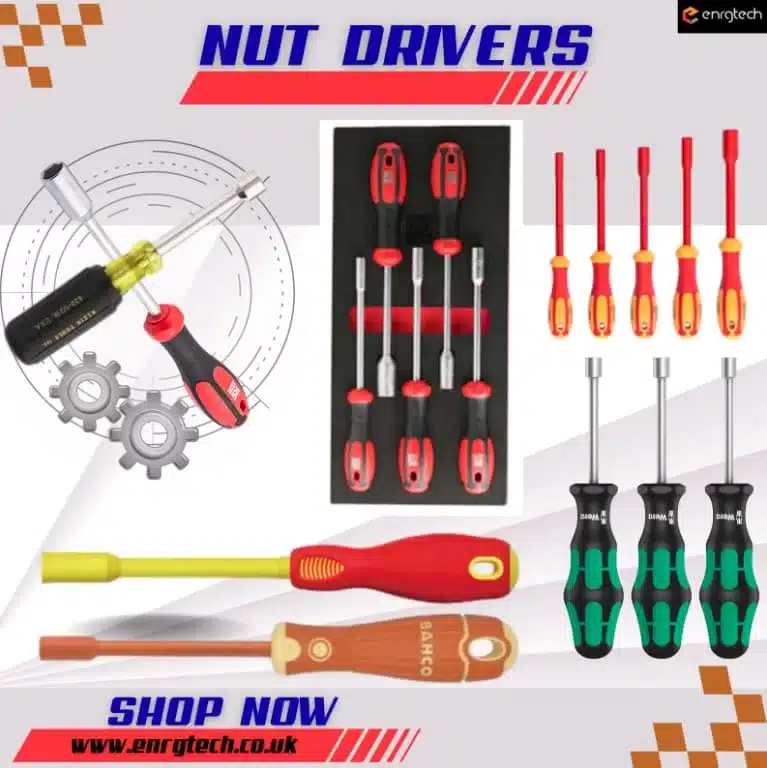
Every professional technician, mechanic, and DIYer knows that having the right tool for the job is non-negotiable. Also, precision work demands a precision tool, and in the world of fasteners, that tool is the nut driver. While it shares a similar handle and grip with traditional screwdrivers, it offers speed, control, and accessibility that other tools cannot match. Forget the frustration of mismatched tools and stripped hardware. Moreover, this definitive article serves as your essential reference, covering what nut drivers are, their significance, popular types, and key differences from other standard tools.
What are Nut Drivers? Definition & Core Functionality
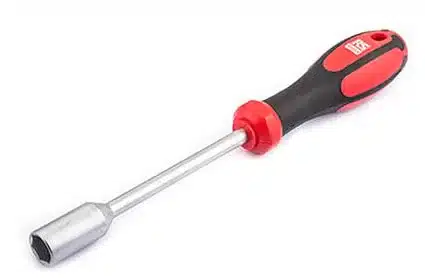
Nut drivers are specialised hand tools specifically designed to manipulate hex-headed nuts and bolts. Also referred to as nut spinners or socket drivers, these manual, handheld devices resemble a standard screwdriver; however, they feature a socket head rather than a flat or cross design. A nut driver typically includes a comfortable handle, a shaft, and an integrated working end (socket) that fits directly over the nut or bolt head. Furthermore, the core functionality of nut setters is to provide a secure grip, improve reach in tight spaces, and enable repetitive fastening with minimal effort. Professionals prefer these tools for controlled torque and quick fastening in tight or repetitive tasks.
The Significance of Nut Drivers in Mechanical Work
Nut drivers play a significant role in mechanical work by providing a fast, precise, and effortless means to tighten or loosen nuts and bolts. They are especially valuable in areas where a wrench or pliers may be challenging to use. They reduce the risk of stripping or rounding off the fasteners’ edges—a common issue with open-ended tools. Moreover, the reliability, ease of use, superior control and torque, and reduced hand strain contribute to their significance in mechanical work.
Most Standard Types of Nut Drivers & Their Uses Explained
Nut drivers come in several variations; each tailored for specific tasks. Some popular types include:
- Standard Nut Drivers
These have fixed-size sockets and are used for general tightening and loosening tasks. In addition, they are common in electrician tool kits, appliance repair sets, and automotive applications.
- Hollow Shaft Nut Drivers
These drivers include a hollowed-out shaft that allows long bolts to pass through the tool. They are ideal for assembling fixtures, mounting components, and tasks involving threaded rods.
- Magnetic Nut Drivers
Magnetic versions securely hold nuts and bolts using a magnet inside the socket. They are useful when working overhead or in narrow spaces where dropping a nut can become a challenge.
- Insulated Nut Drivers
These tools are designed for electrical work and provide insulation to protect users when working near live circuits. Additionally, they meet safety standards and are common among electricians and maintenance technicians.
- Multi-bit or Adjustable Nut Drivers
These feature interchangeable sockets or adjustable heads, making them suitable for technicians who work with a variety of nut sizes. They reduce the need to carry multiple tools.
Nut Driver Sets vs. Individual Drivers: Which One Suits You Best?
They are available as individual pieces, or you can purchase them in sets. A nut driver set is a collection of a full range of socket sizes in one organised case. It offers unmatched versatility and cost-effectiveness, providing convenience, organisation, and readiness for any task. Nut driver sets are ideal for professionals who frequently work with multiple fastener sizes daily. In contrast, individual pieces are better suited for users who only need specific sizes for occasional or specialised tasks. They are affordable, easy to carry, and perfect when you want to avoid unnecessary tools. Moreover, the choice depends entirely on the user’s workflow, frequency of use, and project requirements.
Nut Drivers vs. Socket Wrenches: Finding the Difference
Nut drivers and socket wrenches may look similar, but they serve different purposes. The primary difference lies in their design and the torque they are intended to handle. A nut driver is primarily used for low-torque applications requiring speed, precision, and delicate handling. On the other hand, a socket wrench uses interchangeable sockets with a ratcheting mechanism, giving them far greater torque for heavy-duty applications. It can tighten larger nuts and bolts, providing strength and versatility. In essence, a nut driver is a specialised, one-piece tool for a specific task size, and a socket wrench is a versatile system that utilises various-sized sockets attached to a handle.
Understanding Nut Driver Sizes: Imperial and Metric
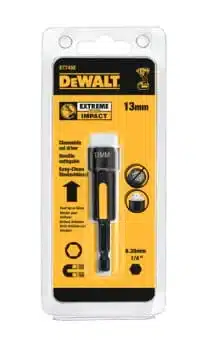
Nut drivers are sized according to the across-the-flats (A/F) dimension of the hexagonal fastener they are designed to fit. Their sizing is fundamentally divided into two systems: Imperial and Metric. Imperial nut drivers are sized in fractions of an inch, like 1/4″, 5/16″, and 3/8″. They are typically used with fasteners common in the United States and older equipment. Metric nut drivers, measured in millimeters, are widely used across Europe and in products designed with international standards.However, they come in common sizes, including 6mm, 8mm, and 10mm. Selecting the correct system ensures a precise fit, reduces the risk of stripping fasteners, and improves overall efficiency.
Final Thoughts
Nut drivers are reliable, practical tools for professionals and DIY users alike. They make fastening tasks faster, safer, and more precise, making them essential for any toolkit. By understanding the key differences between a nut driver and a socket wrench, and mastering the nuances of both Imperial and Metric sizing, users can ensure they always select the perfect fit for the task. With the insights from this guide, you’re now fully equipped to choose, use, and identify socket drivers confidently.
Related posts:
 EV Charging Infrastructure – Challenges For Electric Vehicle Design
 Loop Calibrators: Purpose, Types & Applications
 Understanding Stepper Motors: A 5-Minute Guide
 Alps Electric World’s Smallest Detector Switches
 Microcontrollers: Popular Electronic Components
 What Exactly are USB Hubs? Your Simple Guide
 Motor Control Starter Kit-Microchip Technology
 Silent but Mighty: Proper Handling and Use of Air Blow Guns
 Contactors vs. Relays: A Comparison Guide
 Battery Testers Explained: What They Do & Why They Matter?
 A Complete Guide to Piezo Buzzers
 What are Head Torches & Why Do You Need Them?


