






Introduction
Efficiency is the heartbeat of modern manufacturing. However, fastening challenges are common when working with thin or soft materials. Clinch nuts solve this problem by creating strong internal threads that become an integral part of the base material. In this user-friendly guide, we will cover the fundamentals of these specialised nuts, helping you understand their purpose, performance, significance, standard types, and common FAQs.
What are Clinch Nuts? Basic Definition & Core Functionality
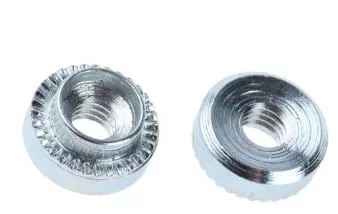
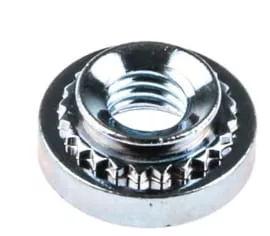
Clinch nuts, also referred to as self-clinching nuts or press nuts, are specialised fasteners that become a permanent part of the substrate-most commonly metal sheets-once installed. These nuts sit flush with the host material and permanently lock in place. Captive nuts feature a serrated shank or knurled body that embeds into the material, creating a secure, flush-mount connection. The fundamental functionality of a clinch nut is to create a permanent, high-strength threaded point in thin sheet materials where conventional tapping or welding is impractical. Moreover, this makes them a perfect solution for providing secure, flush-mount connections in hard-to-reach areas across various applications.
Why Use Clinch Nuts? Exploring Their Significance
Clinch nuts are indispensable in modern manufacturing for their specialised features and benefits. They create high-strength, permanent threads in materials too thin for traditional tapping. Beyond structural reliability, self-clinching nuts streamline production by eliminating the need for complex hardware like lock washers. By delivering high torque resistance and improving assembly speed, they significantly reduce labour costs. In essence, the significance of a clinch nut stems from its robust reliability, strong connections, ease of installation, and overall cost-efficiency.
Materials and Compatibility of Self-Clinching Nuts
Materials and compatibility play a critical role in the performance of self-clinching nuts. For a successful installation, the host sheet metal must be softer than the fastener to allow it to be displaced into the nut’s clinching ring. Furthermore, most press-in nuts are manufactured from carbon steel, stainless steel, and aluminium, each designed to match the requirements of mating panels. Material compatibility is essential; for instance, using an aluminium nut in a stainless steel panel can lead to rapid degradation or fastener deformation. Ultimately, careful consideration of these factors helps prevent installation failure.
Most Popular Types of Clinch Nuts Explained
Self-clinching nuts are available in various designs to suit a wide array of applications and load requirements. Some standard variants include:
Standard Clinch Nuts
These nuts are the most commonly used fasteners that feature a serrated clinching ring. These industrial workhorses prevent the nut from rotating once installed. Available in both round and hexagonal designs, standard clinching nuts deliver excellent torque and pull-out resistance.
Floating Self-Clinching Nuts
As the name suggests, floating nuts are designed to allow slight movement within the sheet after installation. This floating action helps compensate for minor misalignment during assembly, ensuring smoother mating with bolts or screws.
Flush Clinching Nuts
Unlike standard protruding nuts, flush nuts are designed to sit completely level with the surface on both sides once installed. They feature a hexagonal hole for installation, ensuring the nut doesn’t spin. Flush-mounted clinch nuts are ideal for aesthetic or clearance-sensitive designs.
Blind Self-Clinching Nuts
These fasteners feature a closed-end design that protects internal components from screw penetration or contamination. They used when only one side of the sheet is accessible and are common in enclosures, electrical housings, and closed assemblies.
Miniature Clinch Nuts
These are scaled-down compact versions designed for very thin materials and small-scale assemblies. Despite their size, they provide a reliable thread strength and secure retention. Miniature press-in nuts optimize fastening performance in electronics and compact enclosures with limited space.
Heavy-Duty Clinching Nuts
These fasteners are built for high-load applications, offering superior torque resistance and pull-out performance. Moreover, they are suitable for automotive frames, heavy industrial machinery, or any application subject to significant vibration and tension.
Self-Clinching Nuts vs. Other Fasteners: What’s the Difference?
Self-clinching nuts distinguish themselves from traditional fasteners in various ways. Clinch nuts rely on the unique mechanical installation process known as “cold flow,” which results in them becoming permanent parts of the host material. Unlike other fasteners like rivets, nuts, bolts, and weld nuts, which require specialised tools to hold, clinching nuts are simply installed by pressing them into thin or soft metal sheets. Furthermore, traditional fasteners increase assembly time and loosen under vibration, drawbacks that press nuts lack. In essence, a clinch nut offers a balanced solution that combines strength, speed, and reliability.
FAQs About Clinch Nuts: Most Common Questions Answered
To help engineers, manufacturers, and buyers, we have collected FAQs and answered them clearly about self-clinching nuts:
1. Can clinch nuts be removed after installation?
No, bespoke nuts are designed for permanent installation.
2. Are clinching nuts suitable for aluminium sheets?
Yes, provided the correct material and design are selected.
3. Do press nuts weaken sheet metal?
No, they strengthen fastening points by distributing the load.
4. Can press-in nuts handle vibration?
Yes, they are highly resistant to vibration-induced loosening.
5. Are clinching nuts compatible with automation?
Absolutely. They support high-volume automated production with consistent, reliable performance.
6. How do I select the right clinch nut?
Among various factors, consider sheet thickness, load requirements, environment, and accessibility.
Final Thoughts
Clinch nuts represent an innovative fastening solution for modern sheet metal assemblies. However, their ease of installation, strength, and versatility make them superior alternatives to traditional fastening methods. Addressing common questions further highlights their versatility and the ability to achieve a flush, professional, and vibration-resistant finish in any engineering project.
Related posts:
 All About Infrared Thermometers – An Ultimate Guide
 A Complete Guide to Piezo Buzzers
 Everything You Need to Know About Slot Drills
 Speed Bumps: Enhancing Road Safety & Traffic Management
 Your Easy Guide to Pneumatic Separators
 Contactors vs. Relays: A Comparison Guide
 Understanding Stepper Motors: A 5-Minute Guide
 Why Foam Tapes Stand Out? A Brief Guide
 What are Sprockets? A Beginner’s Guide
 Essential Optical Inspection Equipment
 Wire Strippers in Electronics, Cabling & Maintenance
 Threading Taps Explained: A Beginner’s Guide


