






Introduction
An accelerometer is one of the most important sensors used in modern electronics, yet most people never notice it. These small components quietly measure motion, tilt, vibration, and acceleration, helping devices respond intelligently to their environment. This information guide explains what accelerometers are, how they work, the different types available, and why these silent sensors are the backbone of modern motion-sensing technology.
Introduction to Accelerometers: Why are They Important?
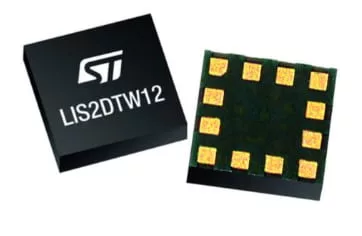
Accelerometers, also called acceleration sensors, are electromechanical devices that measure proper acceleration forces—both movement and changes in direction. These accelerosensors tell us how fast something is speeding up, slowing down, or changing direction. Acceleration is the rate of change of velocity with respect to time. It occurs when speed increases and decreases, direction changes, and any combination of these.
Accelerometers are of significant importance. Without these sensors, devices would not be able to accurately detect movement or changes in position. They are important because they bridge the gap between the physical world and digital data. Their importance comes from the fact that motion is a powerful input. When devices can understand motion, they can respond in real time, improving safety, performance, and user experience.
How Does an Accelerometer Work? The Mechanics of Motion
There are different internal technologies, but the basic idea is the same: a small mass inside the sensor moves when acceleration is applied. The tiny movement is converted into electrical signals, which are then processed and displayed as acceleration data. To understand the mechanics, imagine a box with a small ball inside. If you push the box forward, the ball lags behind and hits the back wall. By measuring the force that the ball exerts on that wall, you can calculate the acceleration.
Key Axes of Accelerometer Measurement You Should Know
Modern accelerometers typically measure acceleration along one or more axes. The axis refers to the direction in which the sensor can detect movement. Accelerometer sensors are categorised by the number of axes they can see and include:
- 1-Axis: Measures motion along a single line (e.g., a simple vibration sensor).
- 2-Axis: Measures movement in the X and Y planes (common in older game controllers).
- 3-Axis: The industry standard. It measures the X, Y, and Z planes, providing a complete 3D profile of the device’s orientation.
Accelerometers vs. Gyroscopes: What’s the Difference?
While these motion sensors are often found on the same chip, accelerometers and gyroscopes serve different purposes. An accelerometer measures linear acceleration—movement in a straight line or the pull of gravity. It is excellent at telling a device which way is down.
On the other hand, a gyroscope is a device that measures angular velocity or rotation. It detects how fast something is spinning or twisting around an axis. While an accelerometer tells you your phone has moved from point A to point B, the gyroscope tells you exactly how much it rotated during that transition. Together, they provide a complete picture of motion: the accelerometer provides the tilt and translation, while the gyroscope provides the twist.
Understanding Key Specifications of an Accelerometer
When selecting an accelerometer, understanding technical specifications is critical.
- Sensitivity: Sensitivity indicates how much output signal is produced per unit of acceleration. Higher sensitivity means a more precise measurement.
- Measurement Range: This refers to the maximum acceleration the sensor can measure. It includes±2g, ±4g,±8g, ±16g, and ±100g (for high-impact applications).
- Bandwidth: Bandwidth refers to the frequency range the sensor can detect. Higher bandwidth is essential for vibration monitoring.
- Noise Level: Noise affects accuracy. Lower noise sensors provide more stable readings, especially in medical and precision equipment.
- Resolution: Resolution refers to the smallest acceleration change the sensor can detect.
- Temperature Range: Industrial accelerometers must operate reliably under extreme heat or cold.
- Power Consumption: Low power consumption is essential for battery-powered devices like wearables and IoT sensors.
Analogue Versus Digital Accelerometers: Types Based on Output
Accelerometer sensors can also be classified by the type of output signal they provide. The two major categories are analogue and digital accelerometers:
Digital Accelerometers: These sensors provide data in digital format using communication protocols such as I2C or SPI. These models include internal processing and send acceleration readings directly to microcontrollers. Digital sensors are more common in modern electronics because they are easier to integrate into microprocessor-based systems and provide more stable and accurate readings.
Analogue Accelerometers: These sensors provide a continuous voltage output that varies with acceleration. The greater the acceleration, the higher or lower the voltage signal becomes. Analogue sensors are often used in systems where simple motion detection is needed and where the signal can be processed directly through electronic circuits.
Most Standard Types Of Accelerometers By Application
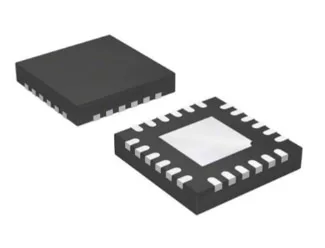
Different industries and products use accelerometers in different ways. These popular types include:
Consumer Electronics Accelerometers
Devices such as smartphones, tablets, laptops, game controllers, wearables, and fitness trackers use tiny, low-cost MEMS accelerometers to:
- Detect screen orientation.
- Enable step counting and activity recognition.
- Sense taps, shakes, and gestures.
- Provide motion input for games and user interfaces.
Automotive Accelerometers
Automotive accelerometers often have strict requirements for temperature range, reliability, and safety certifications. In vehicles, accelerometer sensors are used for:
- Airbag deployment control.
- Electronic stability control and traction systems.
- Ride comfort and suspension monitoring.
- Navigation systems that combine GPS with inertial sensors.
Industrial And Structural Monitoring Accelerometers
Industrial and civil engineers use acceleration sensors to:
- Monitor vibration of rotating machinery such as motors, pumps, and fans.
- Detect imbalance, misalignment, or bearing wear.
- Track structural health of bridges, buildings, and towers.
- Measure shock and impact on equipment during transport.
These applications often use piezoelectric accelerometers with high bandwidth and robust housings.
Aerospace And Drones Accelerometers
In aerospace, accelerosensors form part of inertial measurement units. They work together with gyroscopes and sometimes magnetometers to estimate position and attitude without relying solely on external signals such as GPS. They are used in:
- Aircraft navigation systems.
- Rockets and launch vehicles.
- Satellites.
- Unmanned aerial vehicles and consumer drones.
Medical And Research Accelerometers
In these sectors, small size, comfort, and high data quality are important. Wearable and lab accelerometers are used for:
- Monitoring patient movement.
- Studying gait and posture.
- Analysing impacts in sports science.
- Recording motion in physiology experiments.
Key Takeaways
The accelerometer is a marvel of miniaturisation that translates physical movement into actionable digital data. They precisely measure acceleration, tilt, vibration, and shock, making them perfect for use in electronics, safety systems, industrial monitoring, and smart devices. With multiple types available, accelerometers can be selected for almost any environment or application.
Related posts:
 An Ultimate Guide to Blow Torches
 New Ways to Incorporate Sensors Into 3D-Printed Designs
 Hydrometers – Everything You Need To Know
 Understanding Laser Measures: Precision Tools for Every Project
 How Sensor Fusion Can Enhance Battery Management System
 How To Configure Multiple Wi-Fi Setups On a Headless Raspberry Pi
 Schneider Electric: Industrial Automation and Control
 Wireless Connectivity Solutions for IoT
 Integrating Smart Lighting System with IoT
 LED Lights: Reasons for Quick Burnout and Solutions
 Mesh Networking: Bluetooth 5 Mesh Networking to Advance IoT
 Simplified Sourcing For Fiber-Optic Cable Connectivity


