






Introduction
Pneumatic systems are the muscle behind modern manufacturing, but that muscle is useless without control. At the heart of this control is the pneumatic regulator. These control devices ensure your tools and machinery receive the exact amount of pressure they need, and not a psi more. This guide breaks down what pneumatic regulators are, why they matter, how they work, the popular variants available today, and the key factors to consider when selecting one for your application.
What are Pneumatic Regulators? Basic Definition & Core Purpose
A pneumatic regulator (also called a pressure-reducing valve) is a specialised mechanical device engineered to maintain a constant air pressure at the desired level. Its core functionality is to bridge the gap between supply and demand, acting as a gatekeeper for compressed air. By taking high-pressure intake and outputting air at a controlled, lower pressure, it ensures the air is suitable for downstream equipment.
To understand the regulator’s function, consider it a dimmer switch for air pressure: while your compressor might output a varying range of 100–125 PSI, the regulator ensures your tool sees exactly 90 PSI at all times. This precise control prevents equipment damage and ensures consistent performance. Ultimately, pneumatic regulators provide the stability necessary to extend the lifespan of your tools and create predictable, repeatable system behaviour
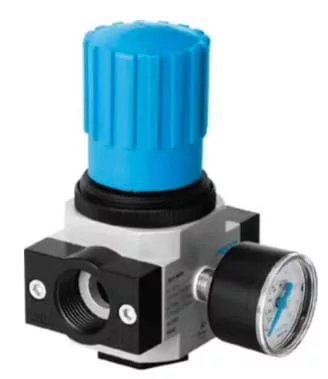
The Significance of Quality Pneumatic Regulators: Why Pressure Regulation Matters?
Using a high-quality pneumatic regulator isn’t just about tuning a machine; it’s about protection and efficiency. Every pneumatic component has a specific operating pressure range, and without proper control, air tools can malfunction, and actuators may behave unpredictably. Additionally, exceeding these limits causes premature wear, ruptures seals, and can lead to catastrophic hardware failure. By providing a safety buffer that extends the lifespan of your entire inventory, a quality regulator acts as the first line of defense for your equipment.
Furthermore, pressure regulation is a primary driver of cost savings. Compressed air is one of the most expensive utilities in a factory setting. Yet many systems run at a standard 100 psi when the application only requires 70 psi—a massive waste of energy. By precisely regulating the air, you reduce artificial demand, lower your energy bills, and minimise the frequency of compressor maintenance. In short: better regulation equals better margins.
How Does a Pneumatic Regulator Work? The Science Behind Its Mechanics
Pneumatic regulators operate using a balancing mechanism that includes:
- Control Spring: Sets the desired outlet pressure.
- Diaphragm: Responds to pressure changes.
- Valve Mechanism: Opens or closes to adjust airflow.
When downstream pressure drops, the diaphragm lifts, allowing more air in. As pressure rises, the diaphragm pushes the valve shut, restricting airflow. This feedback loop ensures that output pressure stays near the setpoint.
Most Standard Types of Pneumatic Regulators Available in the Market
Not all air systems are created equal, which is why several specialised types of regulators exist. Some popular variants include:
- General Purpose Regulators: These are the workhorses and most common types found in most industrial shops. They used in standard air preparation units, providing reliable pressure control for tools, cylinders, and general automation equipment.
- Precision Regulators: These pressure-reducing valves are designed for applications where even tiny fluctuations are unacceptable. They provide very accurate pressure control in instrumentation, testing systems, and medical equipment. Precision regulators offer finer adjustment and greater sensitivity to small flow changes.
- Miniature Regulators: These regulators are compact in size and are used where installation space is limited. Moreover, they are ideal for small machines, portable equipment, panel-mounting, and localised pressure control.
- High-Pressure Regulators: As the name indicates, these regulators are built to handle higher inlet pressures. They are often used in heavy industrial systems, power plants, and specialised pneumatic systems.
- Filter Regulators: These devices combine air filtration and pressure regulation in a single unit. They are designed to remove contaminants while controlling pressure. Filter regulators are commonly installed at air preparation points.
- Pilot-Operated Regulators: These devices use air pressure (rather than a mechanical spring) to control the diaphragm. They are used in systems requiring high flow capacity or extremely stable output pressure. Pilot-operated models offer improved performance over direct-acting regulators in demanding conditions.
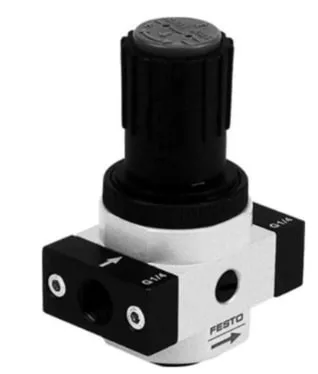
Essential Selection Criteria: Choosing the Right Pneumatic Regulator
To ensure you don’t end up with a “bottleneck” in your system, consider these factors before purchasing:
- Operating Pressure Range
The regulator must safely handle both the maximum inlet pressure and the required outlet pressure. Always select a model rated above your highest possible supply pressure.
- Flow Capacity
The regulator must support the air consumption of connected equipment. Undersized regulators cause pressure drop, slow response, and unstable operation.
- Accuracy and Sensitivity
Precision applications require regulators with fine adjustment capability and minimal pressure deviation during flow changes.
- Port Size and Connection Type
Ensure compatibility with existing tubing, connectors, and system layout to prevent unnecessary restrictions or leaks.
- Environmental Conditions
Consider temperature, humidity, vibration, and exposure to chemicals or dust. Industrial environments often require robust housings and corrosion-resistant materials.
- Relieving or Non-Relieving Function
Relieving regulators are ideal where downstream pressure may rise and must be vented. Non-relieving types are used where venting is not desirable.
- Maintenance and Durability
Choose regulators with accessible adjustment, reliable seals, and proven long-term performance to reduce downtime and servicing costs.
Key Takeaways
Pneumatic regulators are an indispensable stabiliser of the industrial world. By understanding the mechanics of how they balance forces and the importance of selecting the right type for your specific needs, you can protect your equipment, save on energy costs, and ensure a high-quality output. Whether you are running a small workshop or a massive manufacturing plant, the right regulator is the key to a controlled, efficient system.
Related posts:
 Speaker Drivers: Key Components in Modern Audio Technology
 Multiple Functions in New PMIC for Low-power Designs
 Junction Boxes | A Complete Guide
 All About AAA Batteries: Importance, Types, and Applications
 Basic Laboratory Equipment You Should Know About
 Impact of Multi-Channel Temperature Sensors in Automotive Design
 Exploring the Power of Scalable Microcontrollers in Design Flexibility
 PCB Connectors: Types and Maintenance.
 Serial Converters & Extenders: A Complete Guide
 A Beginner’s Guide to Hydraulic Hand Pumps
 Gas Detectors: Must-Have Safety Tools for Different Workplaces
 Scale Inhibitors for Water and Pipeline Protection


