






Introduction
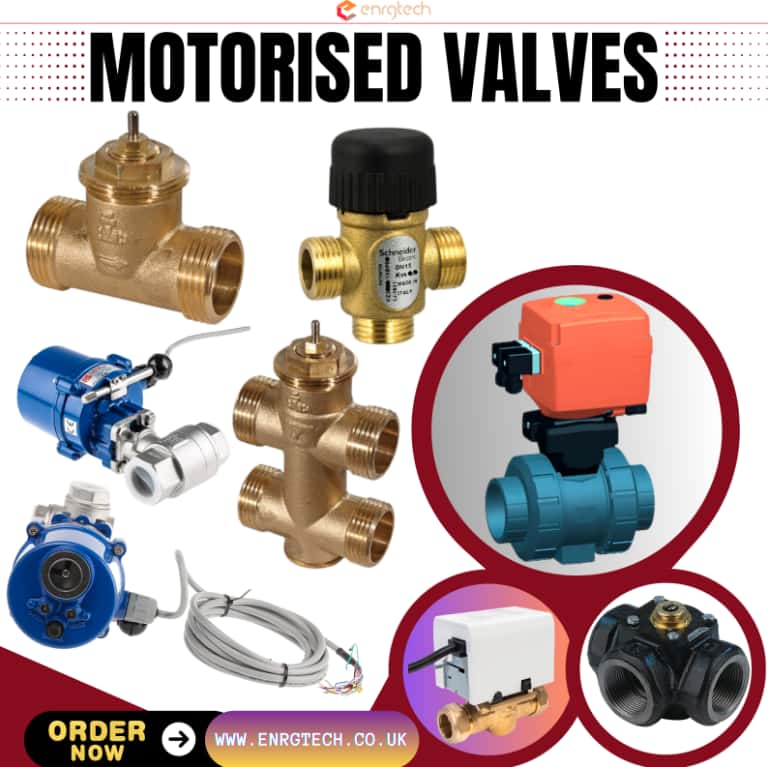
When we talk about managing the flow of liquids or gases, valves are the fundamental components. But in modern, automated systems, manually turning a handle is inefficient and slow. That’s where motorised valves come into play, representing a significant leap forward in automated flow control. This blog gives you a simple understanding of these electric valves and how they precisely control flow in industrial, commercial, and even advanced home heating systems.
What is a Motorised Valve? Basic Definition & Core Function
Motorised valves, often called Motor-Operated Valves (MOVs) or electric valves, are specialised valve types that use electric motors to automatically and remotely control the fluid flow (liquid or gas) through a pipeline. Instead of being opened or closed by hand, these valves automatically regulate fluid flow either by opening, closing, or partially obstructing various passageways. The fundamental function of a motorised valve is to translate electrical signals into mechanical motion in response to control signals from the system. These motor-controlled valves provide remote, timed, or sensor-based operation in applications where manual control is impractical.
How Do Motorised Valves Work? The Actuator is the Brain
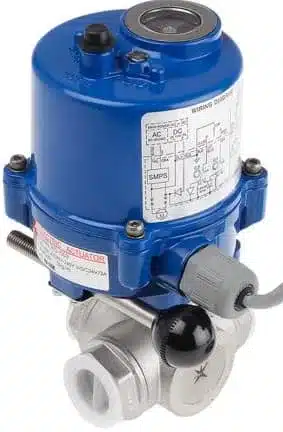
The magic of a motorised valve lies in its actuator. This component automatically performs the function that a human operator would traditionally do—turning a handle or wheel. When the control system sends a signal, the electric motor activates, engaging the actuator. This actuator either opens or closes the valve, depending on the signal. Some valve models include limit switches that determine the valve’s position. Once the desired position is reached, the motor shuts off, preventing damage and improving reliability.
The Significance of Motorised Valves Over Manual Valves: A Brief Look
Motor-operated valves are of significant importance compared to traditional manual valves in several ways. The primary significance lies in their ability to provide automation, precision, and remote operation in fluid control systems. Unlike manual valves, which require a person to physically turn a handle, MOVs use an electric motor to open/close the valve mechanism. Their precision flow control is vital across industries such as chemical processing, power generation, and water treatment. Furthermore, actuated valves reduce errors, enhance reliability, and support smarter, more energy-efficient system operation. In addition, the remote control and automation, safety and reliability, and seamless integration with control systems make them a perfect alternative for modern, complex systems.
Most Standard Types of Motorised Valves Explained
Not all motorised valves are the same. They come in various styles based on their internal structure (valve type), number of ports, and designs. Some of their popular types and uses are given below:
- Motorised Ball Valves
Motorised ball valves integrate an electric motor and have a rotating ball with a hole through the centre to control flow. They are known for fast operation, tight shutoff, and long service life. These valves are widely used in HVAC systems, water treatment, and industrial automation.
- Motorised Butterfly Valves
Butterfly valves control flow using a shaft-mounted rotating disc. Motorised butterfly valves are lightweight, cost-effective, and suitable for large-diameter pipes. They are commonly found in water distribution and ventilation systems.
- Motorised Gate Valves
These valves open and close by lifting a built-in gate mechanism out of the flow path. Motorised versions are used where minimal flow resistance is required. They are often found in industrial pipelines but operate more slowly than ball or butterfly valves.
- Motorised Globe Valves
Globe valves are designed for accurate flow control. When fitted with a motorised actuator, they are ideal for applications that require throttling and precise regulation, such as heating systems and the process industry.
- Two- and Three-Port Motorised Valves
This classification refers to the number of connections (ports) the valve has. A 2-port motorised valve has one inlet and one outlet that control flow on/off along a single line or passage. A 3-port valve has three connections. They can either divert flow from a common inlet to one of two outlets or mix two separate inlet flows into a single common outlet.
Control Options and Power Supply of Motorised Valves
Motorised valves are designed with flexible control options and power supply choices to suit varied automation needs. These valves can be operated using simple on/off, floating, or modulating control. Signals such as 0–10 V or 4–20 mA allow precise flow regulation. Control can be managed manually via switches or automatically through PLCs, building management systems, or dedicated controllers. In terms of power supply, motor-operated valves are commonly available in various voltages suitable for different application needs. For instance, 24 V AC or DC valves are available for low-voltage, safety-focused applications, as well as 110 V or 230 V AC for industrial environments.
How Long Do Motorised Valves Last? Can They Be Repaired?
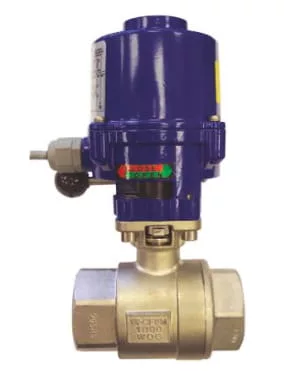
Motorised valves typically last 10-15 years, depending on various factors. Their lifespan usually depends on how often they are used, the quality of the water and the valves, and the environment they operate in. Valves used in clean water or light-duty systems usually last longer than those exposed to high pressure, extreme temperatures, or corrosive fluids. While the operation cycles of these valves are long, they do fail. In terms of repairs, MOVs can be repaired rather than replaced. Common repairs include changing the actuator motor, gears, seals, or control components, while the valve body often remains in place.
Key Takeaways
Motorised valves are the silent workhorses of automated fluid control systems. They bring automation, efficiency, comfort, and control together in a single compact device, essential to modern industry and smart infrastructure. Understanding the power supply and control options of MOVs can help ensure they are selected and operated correctly. Equally important is knowing their expected lifespan and repair potentials. In essence, when considering a system that requires remote, precise, or automated flow control, a motorised valve is the solution.
Related posts:
 Photodiodes Explained: Key Semiconductors in Modern Electronics
 A Beginner’s Guide to Data Loggers: What You Should Know
 An Overview of Multifunctional LED Strip Lights
 End Mills – High-Precision Cutting Tools for Milling & Machining
 Microwave Detectors: Precision Tools for Detecting Microwave Emission
 Finding the Best Printer Ink and Ink Cartridges: A Detailed Guide
 A Complete Guide to Thermohygrometers
 Pneumatic Air Dryers: Everything You Need to Know
 Extension Ladders vs Telescopic Ladders: Which One To Choose?
 pH Meters | An Ultimate Guide
 A Complete Guide to Durometers
 A Deep Dive Into Comparators Basics


