






Introduction
In the world of electrical engineering and industrial safety, the smallest components often carry the heaviest responsibilities. Among these, the earthing strap stands as a critical line of defense. Protecting both sensitive equipment and human life, these components ensure that stray electrical currents are safely diverted to the ground. This guide explores everything from their fundamental purpose to the technical reasons why they are preferred over traditional wiring.
What are Earthing Straps? Definition & Core Purpose
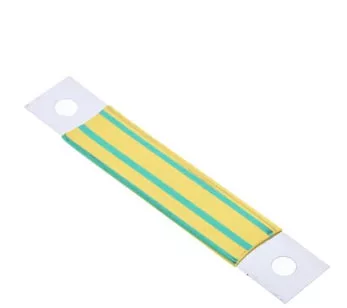
An earthing strap (also referred to as a grounding strap) is a specialised electrical conductor designed to connect two or more objects to a common ground. These conductive connectors create a low-resistance path between an electrical circuit or metal housing and the earth. Earthing straps are often flat, braided, or mesh-like connectors made from highly conductive materials, typically copper (either bare or tinned) or stainless steel. Moreover, their physical design is intentional, allowing them to bridge gaps between moving or vibrating parts where a rigid connection would fail.
The core purpose of an earth strap is equipotential bonding. This means ensuring that all metal parts of a system remain at the same electrical potential (voltage). By doing so, the strap prevents the buildup of static electricity, lightning strikes, and faults. They also ensure that during a short circuit, the fault current is diverted to the grounding system, triggering circuit breakers or fuses to isolate the danger.
Why an Earthing Strap Matters? Exploring Its Significance
The significance of an earth strap cannot be overstated. Their importance stems from their ability to protect systems and users from the adverse effects of uncontrolled electricity. In modern electronics, high-frequency noise can wreak havoc on signal integrity. Electrical surges, stray voltages, and static buildup can cause significant damage, especially to sensitive electronic devices and communication systems. A well-installed earthing strap ensures these excess voltages are safely redirected to the ground.
Beyond signal integrity, grounding straps are essential for human safety and fire prevention. Without proper grounding, a fault in a heavy machine could turn its entire metal chassis into a live conductor. If a worker touches that machine, they become the path to ground, risking a potentially fatal electric shock. Furthermore, the danger extends beyond the individual to the environment itself. In spaces involving flammable gases or chemicals, even a single spark from static discharge can trigger a catastrophic explosion. Grounding straps mitigate these risks at the source, ensuring safety by constantly dissipating static charges.
Why Use Earthing Straps Instead of Solid Wire?
A common question is why engineers choose flat, braided straps over standard, round, solid wire. The answer lies in physics—specifically, flexibility and the Skin Effect. While both solid wire and grounding straps serve the purpose of grounding, their characteristics differ considerably.
Solid wire is rigid; under constant vibration and mechanical stress, it may crack or break. Braided bonding straps, however, consist of hundreds of tiny woven wires. They can bend, twist, and stretch slightly, making them ideal for dynamic applications. Furthermore, at high frequencies, electricity tends to flow on the outside of a conductor rather than through its centre—a phenomenon known as the Skin Effect. A flat, braided strap has a significantly higher surface-area-to-volume ratio than a round wire. This increased surface area provides a much lower impedance path for high-frequency noise and lightning strikes.
Most Standard Types of Earthing Straps Explained: A Brief Overview
Earthing straps are available in various designs tailored to specific applications. The most commonly used types include:
- Braided Copper Straps: These straps are made of woven copper wires, providing excellent flexibility and conductivity. They are widely used in automotive, rail, and industrial settings.
- Tinned Copper Straps: These strands are coated with tin, which resists corrosion and oxidation. They are ideal for outdoor, marine, or high-humidity industrial environments.
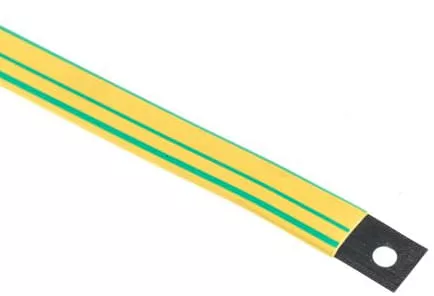
- Flat Copper Braid with Lugs: These are pre-terminated straps with punched holes or lugs designed for easy bolted installation.
- Round Braid Grounding Cables: Used where circular cross-sections are required, these cables are preferred for ease of routing.
- Flexible Laminated Copper Connectors: They are constructed by stacking and riveting copper foils, offering high current capacity while remaining flexible.
- Stainless Steel Earthing Straps: These straps provide robust mechanical strength and corrosion resistance. However, they are employed in corrosive or chemical-heavy environments where copper may degrade over time.
Earthing Strap Selection Guide: Key Factors to Consider
Choosing the right strap is not just about length; you must consider the electrical and environmental stresses the component will face. Some of the critical selection factors include:
Current Carrying Capacity: Ensure the strap can handle the maximum expected fault or discharge current.
Material and Coating: Choose between bare copper, tinned copper, or stainless steel, depending on corrosion resistance requirements.
Flexibility Needs: For applications involving motion, braided types offer the best performance.
Environmental Conditions: Assess exposure to moisture, chemicals, and temperature fluctuations.
Length and Width: Strap dimensions influence impedance and heat dissipation—longer and narrower straps have higher resistance.
Connection Terminations: Pre-installed lugs or terminals save installation time and improve connection reliability.
Standards and Certification: Ensure compliance with electrical safety standards like IEC, UL, or RoHS, depending on the installation region.
Final Thoughts
Earthing straps are crucial components of any electrical infrastructure that requires grounding. They combine high-frequency conductivity with flexible strength, delivering protection that solid wire cannot match. Whether you are building a custom vehicle, maintaining an industrial plant, or protecting a data centre, selecting a high-quality earth strap is a non-negotiable step toward robust safety and reliability.
Related posts:
 Magnetic Door Locks: Trusted Modern Security Solutions
 Your Easy Guide to Pneumatic Separators
 Contactors vs. Relays: A Comparison Guide
 Understanding the Meaning of Fire Safety Signs
 A Comprehensive Guide About the ESP32 Microcontroller Series
 Understanding Toggle Switches: Why Are They Important?
 An Ultimate Guide to Fused Spurs
 A Complete Guide to Piezo Buzzers
 What are Sprockets? A Beginner’s Guide
 The Reason That Makes Homeowners Bound To Go For Commercial Lighting Upgrades
 An Ultimate Guide to Air Sanders
 What Exactly are USB Hubs? Your Simple Guide


