


Introduction
Across modern electrical systems, stability is everything. Fluctuations in voltage, current, or phase can lead to catastrophic equipment failure, costly downtime, and even safety hazards. Monitoring relays serve as the watchful sentinels of these systems, providing a layer of automated intelligence that ensures electrical parameters remain within safe operating limits. This blog explains how these work, their key types, significance, and how to choose the right one for industrial and commercial applications.
What are Monitoring Relays? Definition & Core Functionality
A monitoring relay, often simply called a control relay, is a specialised automated sensing device designed to observe electrical parameters and react instantly when conditions move outside safe limits. Unlike a standard relay, which is simply a switch controlled by an external signal, a monitoring relay is “smart”. It constantly measures the health of the incoming power or the performance of a motor to detect anomalies. By monitoring these specific parameters, the device triggers a response—usually opening or closing a circuit—the moment a fault is detected.
The core functionality of these control relays is protection and preventative maintenance. By identifying issues like overvoltage, undercurrent, or phase loss before they cause physical damage, these relays extend the lifespan of expensive machinery and ensure that electrical installations operate reliably 24/7. By responding in real time, they help protect motors, generators, transformers, power supplies, and sensitive electronic equipment.
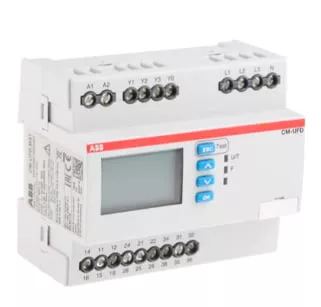
How Does a Monitoring Relay Work? A Brief Overview of Its Operating Principle
The operation of a monitoring relay begins with its internal sensing circuit, which is connected to the electrical line it needs to supervise. The user sets specific “thresholds” or limits on the relay’s face (often via potentiometers or digital displays). For example, if you are monitoring voltage, you might set a window between 210V and 240V.
While the system is running, the relay compares the real-time input values against these thresholds. If the value exceeds or falls below the limit, the relay initiates a time delay (to avoid “nuisance tripping” from minor flickers). If the fault persists beyond the delay, the internal output contacts change state. This action can trip circuit breakers, sound alarms, or shut down a motor to prevent burnout. Once the fault is cleared and the levels return to normal, the relay either resets automatically or requires a manual reset, depending on its configuration.
The Significance of Monitoring Relays in Modern Electrical Systems
Electrical networks today are more complex than ever. This complexity increases the risk of hidden faults that may not be immediately visible. Also, as industries move toward increased automation and “Industry 4.0,” the significance of monitoring relays has grown exponentially. In the past, electrical protection relied heavily on simple fuses or thermal overloads. While effective, these are “reactive” solutions that often act only after damage has begun. Modern monitoring relays are smart, offering precise digital control that can catch subtle irregularities that would otherwise go unnoticed until a motor fails.
Furthermore, these relays contribute to significant cost savings. By providing clear diagnostic indicators (often via LEDs or digital screens), they allow technicians to identify why a system shut down quickly. Whether it was a lost phase or a voltage spike, knowing the exact cause reduces troubleshooting time and prevents the repetitive “trial and error” replacement of parts.
Most Popular Types of Monitoring Relays You Should Know
Monitoring relays are available in many configurations, each designed to supervise specific electrical conditions. Common types include:
Voltage Monitoring Relays: These relays are designed to detect overvoltage, undervoltage, and voltage asymmetry to protect equipment from unstable supply levels.
Phase Monitoring Relays: Critical for three-phase motors, these relays supervise phase sequence, phase failure, and imbalance. They are used in motor protection systems to safeguard motors and generators.
Current Monitoring Relays: These relays measure the current flowing through a circuit. They can identify overload, underload, dry running, or blocked conditions. Current monitoring relays are often applied to protect motors, heaters, and power lines.
Insulation Monitoring Relays: These relays are engineered to measure insulation resistance between live conductors and earth. However, they help detect leakage paths, electric shock hazards, reduce fire risks, and maintain system integrity.
Temperature Monitoring Relays: These relays work with sensors to prevent overheating of motors, transformers, and enclosures.
Power and Multifunction Monitoring Relays: These relays combine several measurement functions into a single device for comprehensive system supervision.
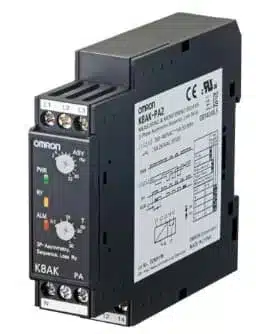
Buying Guide: Choosing the Right Monitoring Relay for Your Needs
Selecting the right relay requires a clear understanding of your specific application. Use the following factors as a quick reference:
- System Type
- Parameters to Monitor
- Response Time
- Number of Phases
- Adjustability
- Mounting Type
- Environment
- Communication Capabilities
- Compatibility with sensors and power systems
- Compliance.
Final Thoughts
Monitoring relays are a cornerstone of modern electrical protection strategies. They provide continuous supervision, rapid fault detection, and dependable control responses that keep equipment, processes, and people safe. Investing in the right monitoring relay today can prevent expensive failures tomorrow—making them a smart, reliable, and essential choice for any electrical setup.


