






Introduction
In industrial automation and electrical engineering, the electrical panel serve as the brain of the operation. However, even the most sophisticated brain needs a way to interact with the physical world. This is where control stations come in, ensuring that power is managed safely, precisely, and instantaneously. Let’s discuss these electrical devices in detail, covering their core purpose, key components, available types, and their significance in modern electrical panels.
What are Control Stations? Definition & Core Purpose
A control station is a specialised centralised interface that houses various manual or automatic devices governing the behaviour of electrical equipment. Essentially, it is the “command centre” for an electrical circuit. These control centres provide a convenient central point for operators to start, stop, reset, or configure equipment. The core purpose of a control station is to allow users to control electrical equipment without direct contact with internal electrical components within the panel. Thus, by organising multiple control elements into a single unit, they reduce operational confusion and help ensure that machines are controlled in a predictable and standardised manner.
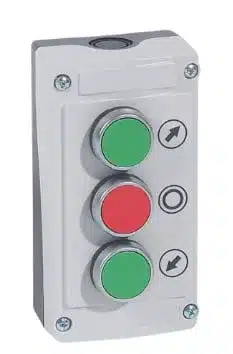
Key Components / Elements of Control Stations
Control stations are designed with several important components that enable safe and effective equipment control. Common elements include:
Push Buttons
Push buttons are the most common interface found in control stations. They are typically used for functions such as start, stop, reset, and emergency stop operations.
Selector Switches
Selector switches are built to allow operators to choose between different operating modes. Examples include manual or automatic operation, forward or reverse motion, and system on/off selection.
Indicator Lights
Indicator lights, also called pilot lights, provide visual feedback about system status. They can indicate conditions like power availability, machine operation, fault alerts, or standby mode.
Emergency Stop Buttons
Emergency stop buttons are critical safety devices designed to immediately halt or shut down all operations during hazardous situations. They are usually large, red, and easily accessible.
Enclosures
Enclosures protect internal electrical components from dust, moisture, mechanical damage, and other environmental factors. Industrial control station enclosures are often made from durable metal or high-impact plastic.
Importance of Control Stations in Electrical Panels
Control stations are of significant importance, offering unmatched benefits in modern industrial environments. Though these physical devices have mostly been replaced by touchscreen (HMIs), physical control stations remain indispensable for the following reasons:
Safety: These stations provide a dedicated, accessible point for emergency shutdowns.
Efficiency: By localising controls, operators can manage equipment without needing to access the complex interior of a main distribution board.
Status Monitoring: Using pilot lights and indicators provides real-time feedback on whether a system is healthy or requires maintenance.
Environmental Protection: High-quality models are built to withstand harsh environments (oil, water, or explosive gases) that standard switches cannot.
Most Standard Types of Control Station Types
Modern electrical systems use several types of control stations. Here are the most common configurations based on their application, design, and protection level:
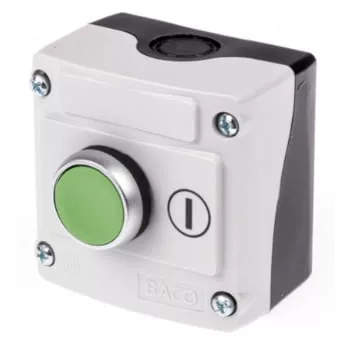
Push Button Control Stations
These are the most common and include various colours and symbols for intuitive operation. They feature start and stop buttons for controlling motors or machines. Push-button stations are used in nearly every industrial panel for routine start-and-stop control.
Emergency Stop Stations
As the name implies, emergency stop stations are specifically designed for safety. They include a large emergency red mushroom-head button to ensure quick system shutdown during emergencies.
Selector Switch Stations
These stations feature selector switches that allow selection between multiple operational modes. They may include key-operated versions to prevent unauthorised use.
Illuminated Control Stations
These stations include built-in lighting to indicate active states or conditions directly on the device.
Multi-Function Control Stations
These advanced stations combine several control elements into a single enclosure for centralised control of complex processes.
Control Stations vs. Other Panel Components
It is easy to confuse control stations with other components like contactors, circuit breakers, or relays, but their roles are distinct. To understand it, consider the panel components as the “muscles” that physically open or close high-power circuits inside the panel. In contrast, the control station is the “voice” that tells those muscles when to move.
Most electrical panel components operate automatically within the system. For instance, contactors manage power switching, MCBs and fuses protect against overloads and PLC modules manage logic and automation tasks. On the other hand, control stations provide a physical interface that connects human commands with the electrical system. Together, these components form a complete and reliable electrical control environment where both automation and human supervision work in balance.
Final Thoughts
Control stations are an essential part of modern electrical panels and industrial automation systems. They provide a simple yet powerful interface that allows operators to manage machines safely, efficiently, and with confidence. By combining various control elements into organised units, a control station helps improve safety, streamlines operations, and supports reliable electrical system management across many industries.
Related posts:
 Speaker and Audio Cable Explained
 What Are Connector Wrenches – A Complete Guide
 Serial Converters & Extenders: A Complete Guide
 Sounder Beacons: All-in-One Solution for Enhanced Safety
 Air Compressors: Must-Have Machines for All Your Workplaces
 Force Gauges: A Definitive Guide
 Optimising Electrical Testing with Ammeters: Best Practices and Tips
 Key Enablers for Machine Type Wireless Communication in 6G
 Why Do the Light Bulbs Keep Burning Out?
 A Beginner’s Guide to Glue Guns
 5 Essential Construction Site Protective Equipment that Workers Must Use
 Introduction to Next-Gen Force Sensors: Types and Applications


