


Introduction
In the world of industrial automation, medical diagnostics, and retail kiosks, space is a premium commodity. Panel printers provide a seamless way to output data directly from a machine’s interface. Unlike the bulky inkjet or laser printers we use in offices, panel printers are designed for a specific purpose: to be embedded directly into a larger piece of equipment. Moreover, explore the world of these specialised printers, their core functions, material compatibility, and how they compare to traditional printing methods in this comprehensive guide.
Understanding Panel Printers: Definition & Core Functionality
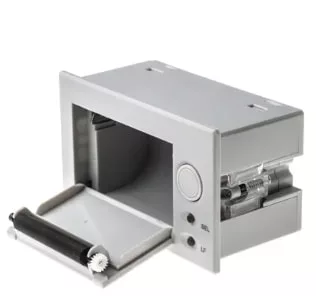
A panel printer, also known as a panel-mounted printer, is a specialised printing device designed to be embedded directly into a piece of equipment, a dashboard, or a kiosk housing. Unlike a desktop printer that sits on a surface, a panel printer is “flush-mounted,” meaning its faceplate sits level with the surface of the host machine while its body remains hidden inside. Their primary function is to provide immediate, on-site documentation, such as receipts, labels, or data logs, triggered by the machine’s internal system.
At their core, most panel printers utilise direct thermal technology. This means they use a heated print head to apply patterns onto heat-sensitive paper, eliminating the need for ink cartridges or ribbons. This functionality is critical for industrial environments because it reduces maintenance requirements and ensures the printer can reliably operate for extended periods without human intervention. They are typically connected via Serial (RS232), Parallel, or USB interfaces to communicate directly with the host controller.
Panel Printers vs Traditional Printing Methods: Key Comparisons
The most significant difference between panel printers and traditional desktop printers lies in their form factor and durability. Traditional printers are designed for general-purpose document handling in controlled environments like offices. In contrast, panel printers are ruggedised to withstand the vibrations, dust, and temperature fluctuations often found in industrial settings or outdoor kiosks. While a traditional printer focuses on high-resolution colour or large-format pages, a panel printer prioritises “point-of-use” efficiency and space-saving.
Furthermore, the maintenance cycle differs drastically. Traditional inkjet or laser printers require frequent toner or ink replacements and are prone to paper jams due to complex feeding mechanisms. Panel printers are engineered for minimal downtime. However, by using thermal paper and a simplified paper-path design, they offer a “drop-in” loading style that allows even untrained users to replace paper rolls in seconds. While they lack the colour depth of traditional methods, their reliability in mission-critical tasks is unmatched.
Materials Compatibility with Panel Printers: Common Printable Materials
Panel printers are specialised tools, meaning they don’t print on standard 20lb office paper. Instead, they rely on materials suited for their specific internal mechanisms:
- Thermal Paper: The most common material. It is coated with a chemical that turns black when heated by the print head.
- Adhesive Labels: Used frequently in medical or logistics settings where a panel-integrated system needs to produce stickers for samples or packages.
- Linerless Media: An eco-friendlier option for some industrial models that allows for labels without the backing paper, reducing waste.
- Synthetic Thermal Media: For outdoor kiosks (like gas pumps), waterproof or UV-resistant thermal paper is used to prevent print from fading in the sun or smudging in the rain.
Main Types of Panel Printers Available in the Market
Depending on the application, you will find several distinct variations of panel printers:
Thermal Panel Printers: The industry standard. They are silent, fast, and require no ink. Ideal for receipts and tickets.
Impact (Dot Matrix) Panel Printers: These use a ribbon and tiny pins. While louder and slower, they are used when multi-part forms (carbon copies) are needed or when the print must withstand high temperatures where thermal paper would turn black.
Label Panel Printers: Specifically designed with sensors to detect gaps between stickers, ensuring precise alignment for barcode printing.
Miniature/Embedded Modules: Extremely small versions used by hobbyists and engineers for handheld devices or small-scale DIY electronics.
Choosing the Right Panel Printer for Your Needs: Buying Guide
If you are an engineer or product designer looking to integrate a printer, consider these three technical factors:
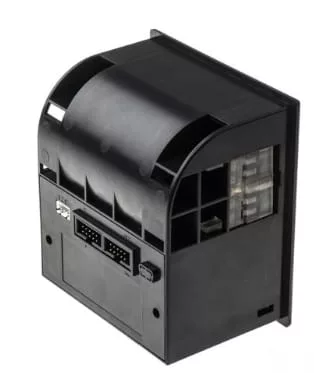
Physical Dimensions: Measure your panel cutout. Standard widths are usually 58mm or 80mm. Ensure the depth behind the panel is sufficient for the printer’s body.
Paper Width: Common sizes include 58mm, 60mm, and 80mm.
Interface Type: RS232, USB, or TTL logic levels.
Voltage Requirements: Typically, 5V, 12V, or 24V DC.
Print Resolution: Usually measured in dots per millimeter (e.g., 8 dots/mm).
Print Speed: Measured in mm/s. For high-traffic kiosks, look for 150 mm/s or higher; for simple data logging, 50 mm/s is plenty.
Environment Rating: Look for “NEMA” or “IP” ratings for harsh conditions.
Bottom Lines
Panel printers have transformed the way businesses print on rigid surfaces. Furthermore, by enabling direct-to-panel printing, they eliminate extra processing steps, enhance durability, and expand creative and industrial possibilities. From control panels and machine labels to architectural décor and large format signage, these printers offer unmatched versatility.


